

How to Care for a Christmas Cactus: Light, Water & Getting It to Bloom

Learn how to care for a Christmas cactus: the right light, watering schedule, soil, temperature and the simple 6-week trick to make it bloom every holiday season.
A Christmas cactus is one of the few houseplants that can bloom right in the middle of winter — and with the right care, it can do it for decades. Many families pass the same plant down for generations. Yet it is also one of the most misunderstood plants: it isn’t a desert cactus, it doesn’t like full sun, and it won’t flower if your home stays too warm at night.
This guide walks you through everything you need to know — light, watering, soil, temperature, feeding and, most importantly, how to get your Christmas cactus to bloom every holiday season.
Quick Answer
To care for a Christmas cactus, keep it in bright, indirect light, water when the top inch of soil is dry, use a fast-draining potting mix in a pot with drainage holes, and keep it at 65–70°F. To make it bloom, give it about 6 weeks of long nights (12+ hours of darkness) and cool 55–65°F nights starting in early fall.
What Is a Christmas Cactus?
The Christmas cactus (Schlumbergera bridgesii) is a tropical forest cactus from the coastal mountains of Brazil. In the wild it grows on tree branches and rocks in humid, shady rainforests — not in the desert. That single fact explains most of its care needs: it prefers bright but filtered light, more humidity and more regular watering than typical cacti, and a loose, fast-draining soil.
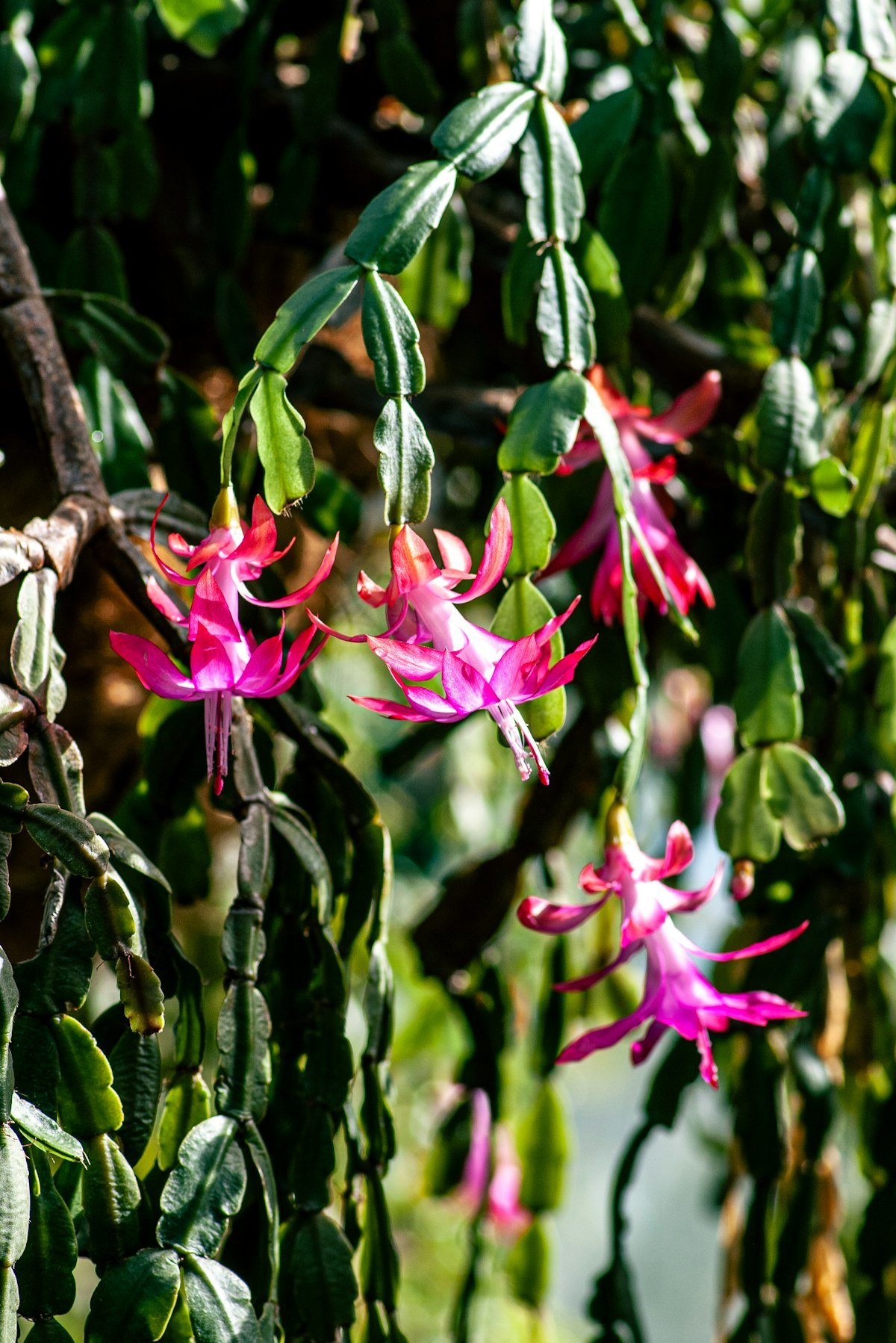
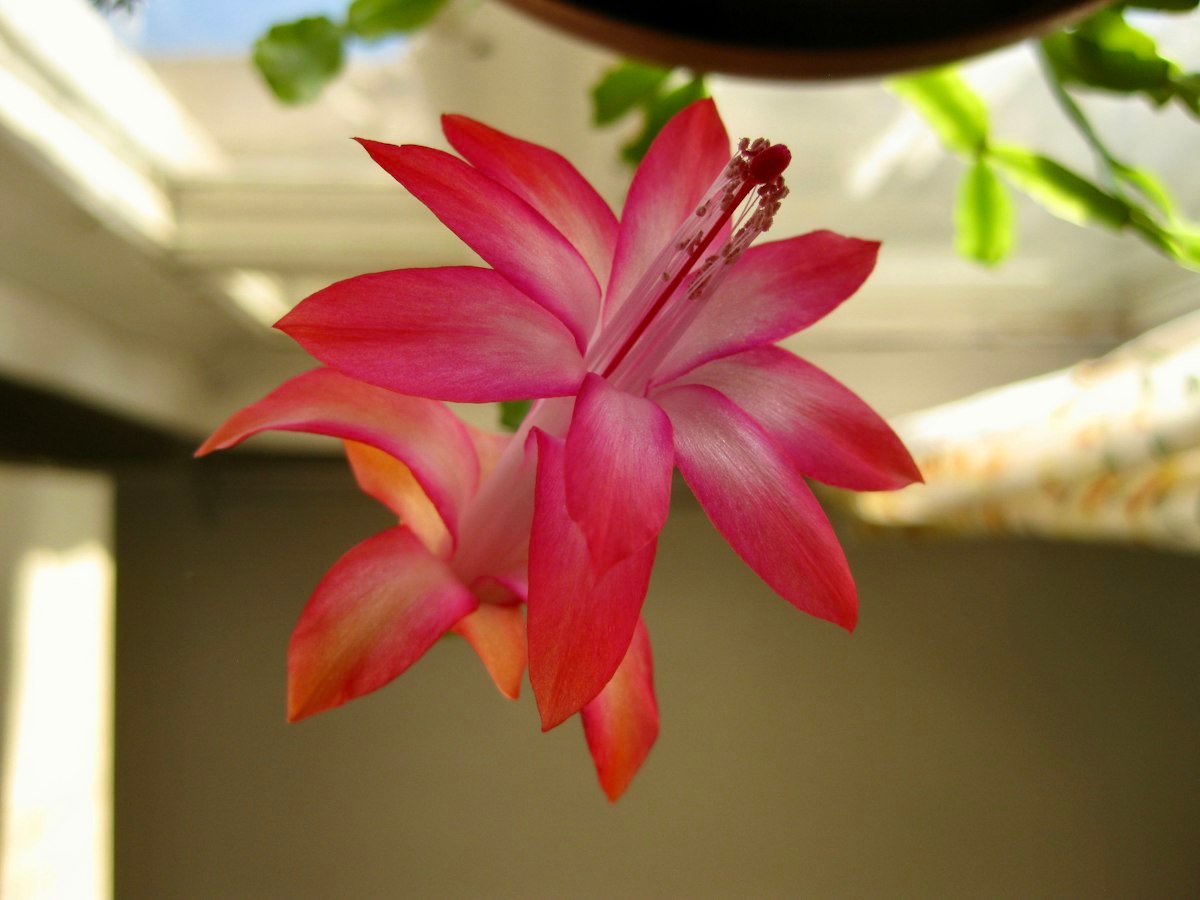
Instead of leaves, it has flat, segmented stems called cladophylls. Flowers form at the tips of these segments in shades of pink, red, magenta, purple, orange, yellow and white.
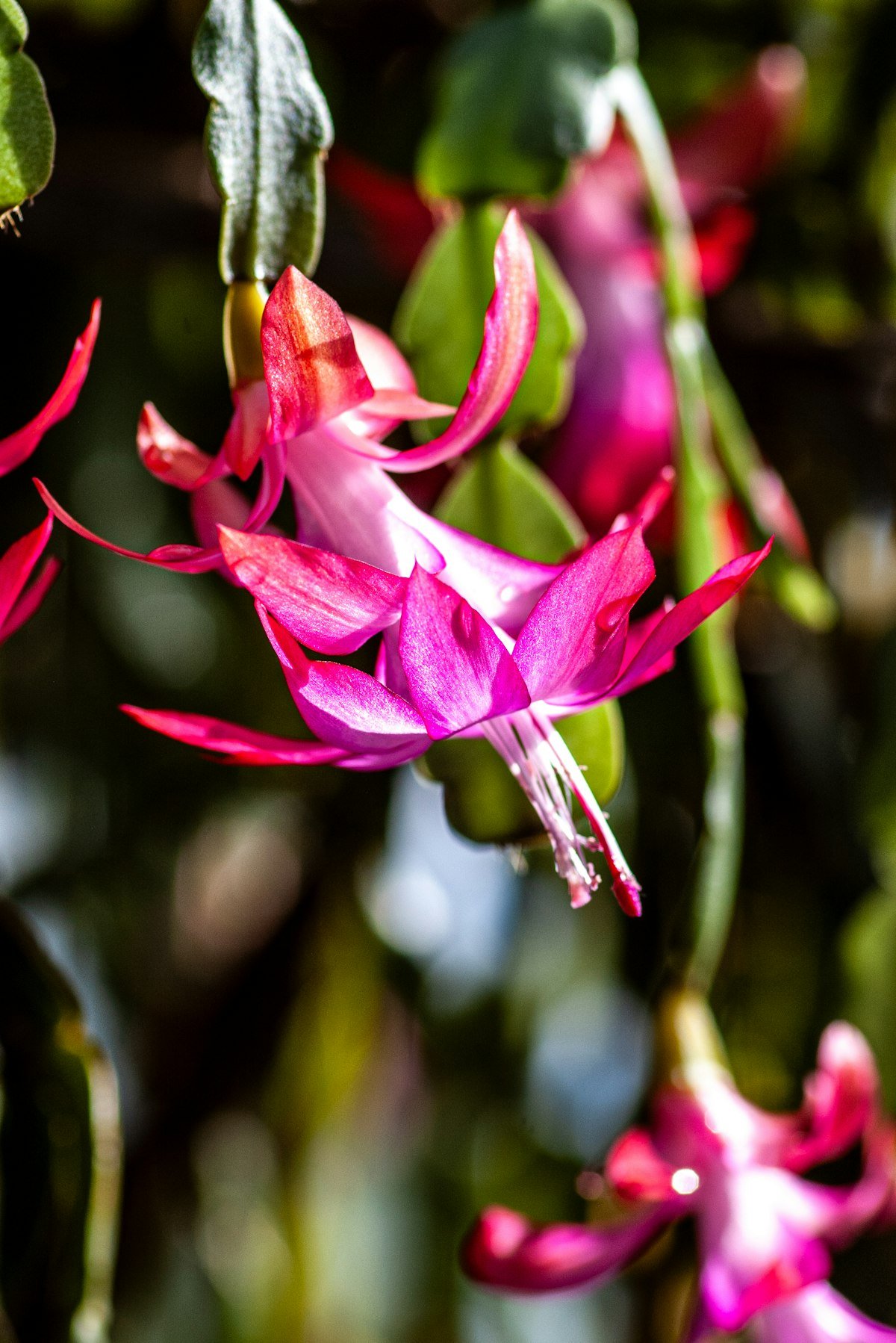
Is It a Christmas, Thanksgiving or Easter Cactus?
Most “Christmas cacti” sold in US stores around the holidays are actually Thanksgiving cacti (Schlumbergera truncata), because they bloom earlier and ship well. The care is almost identical, but knowing which one you have helps you time blooming. The easiest way to tell them apart is the shape of the stem segments:

| Type | Stem Edges | Usual Bloom Time |
|---|---|---|
| Thanksgiving cactus (S. truncata) | Pointed, claw-like teeth | November – December |
| Christmas cactus (S. bridgesii) | Smooth, rounded, scalloped | December – January |
| Easter cactus (S. gaertneri) | Rounded with small bristles; star-shaped flowers | March – May |
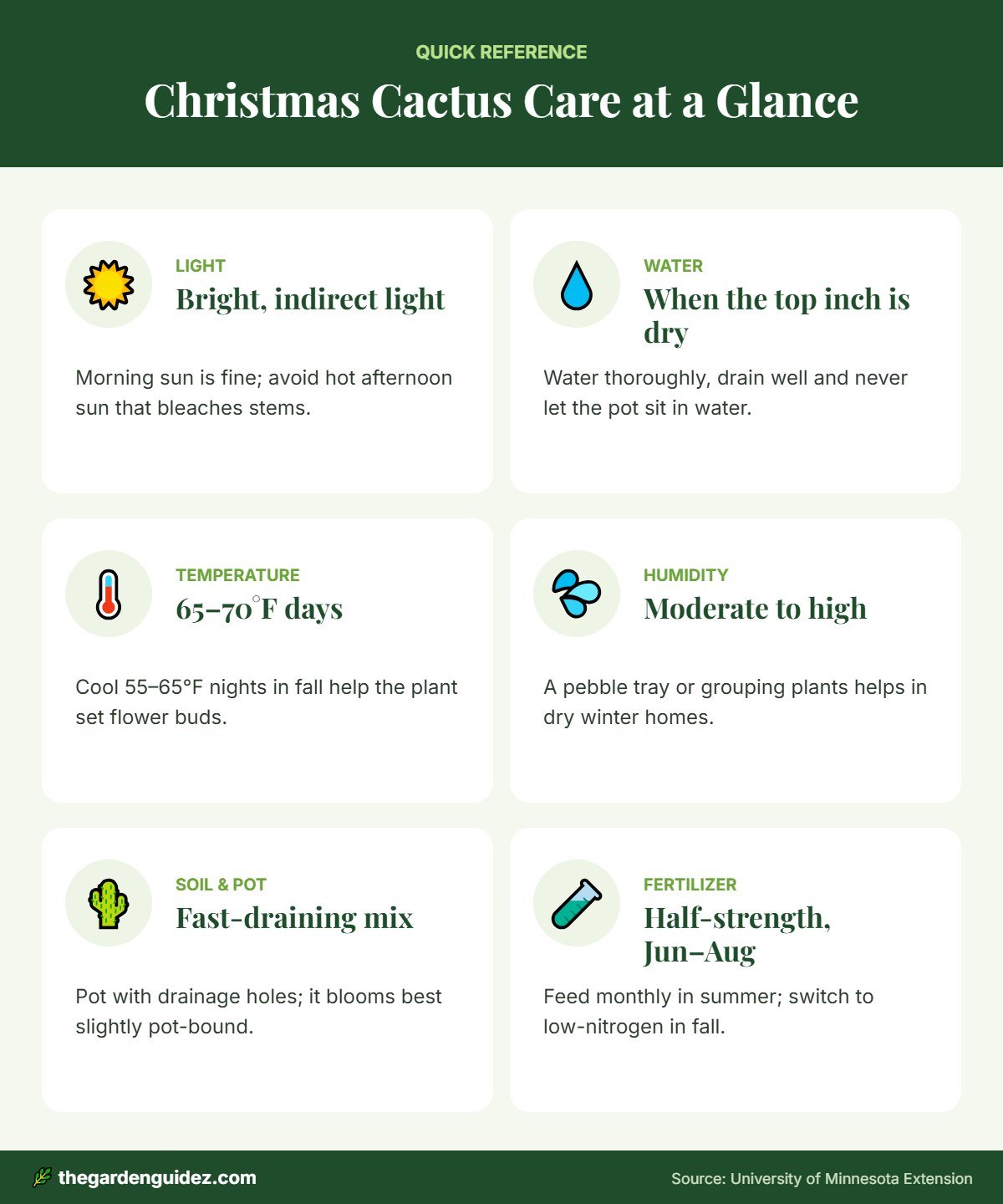
Christmas Cactus Care at a Glance
Save or screenshot this quick-reference chart. Each point is explained in detail below.
Light: Bright but Indirect
Place your Christmas cactus in bright, indirect light — an east-facing window is ideal, or a few feet back from a south or west window. A little gentle morning sun is fine, but strong afternoon sun can bleach the stems pale green or reddish and dry the plant out.
- Too much sun: pale, yellowish or reddish segments and dry soil.
- Too little light: slow growth, stretched segments and few or no flowers.
- Summer outdoors: the plant enjoys a shady patio with about 3–6 hours of filtered sun, such as under a tree. Bring it back inside before the first frost.
Not sure what “bright indirect light” looks like in your home? See our plant light guide.
How to Water a Christmas Cactus
Because it comes from a rainforest, a Christmas cactus needs more water than a desert cactus — but it hates soggy soil. Root rot from overwatering is one of the most common causes of death, according to the University of Minnesota Extension.
Step 1: Check the Soil First
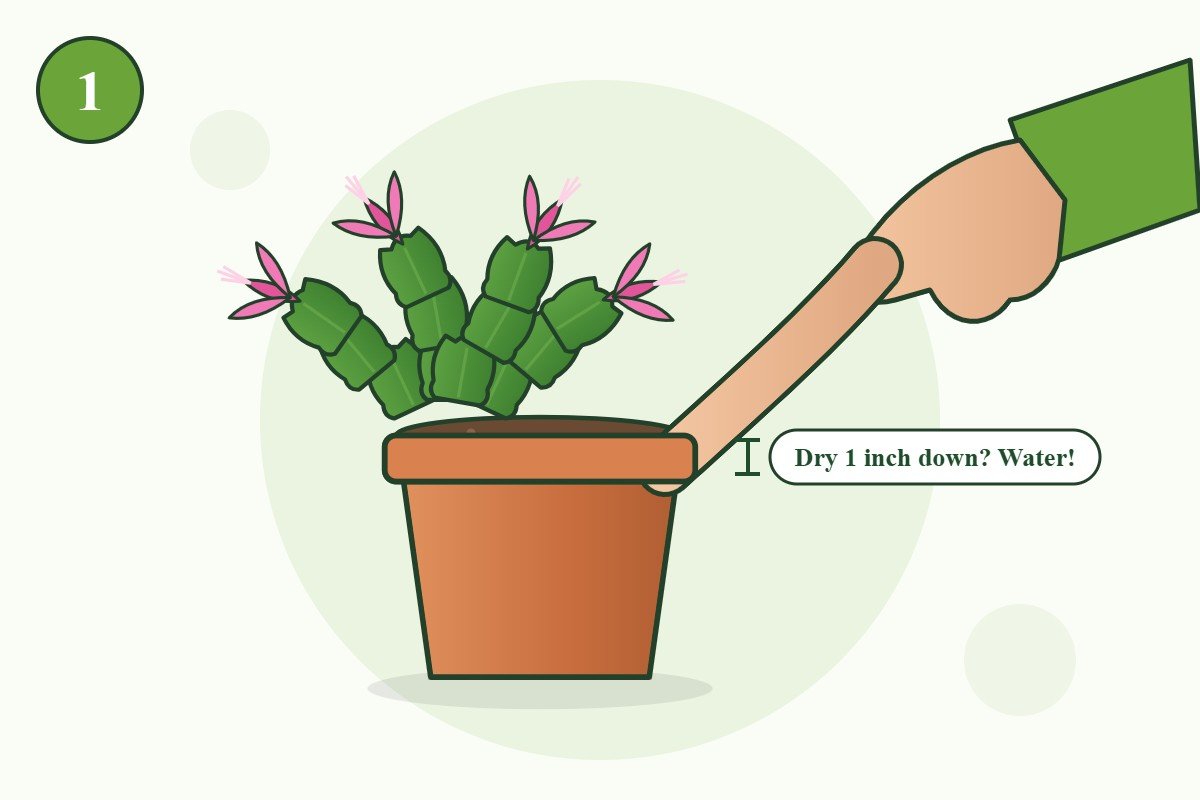
Push a finger about 1 inch into the potting mix. If it feels dry at that depth, it’s time to water. If it still feels moist, wait a few days and check again.
Step 2: Water Thoroughly
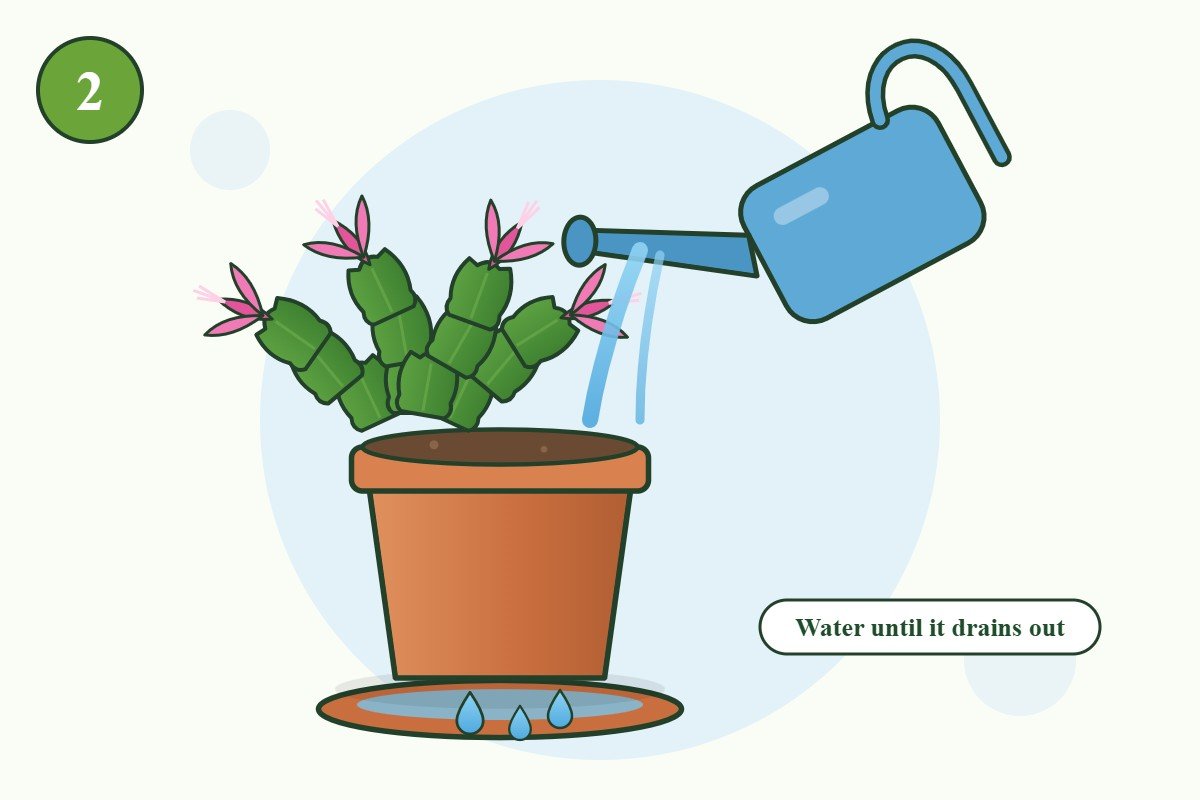
Water slowly and evenly until water runs out of the drainage holes. This makes sure the whole root ball gets moisture, not just the top layer.
Step 3: Let It Drain Completely
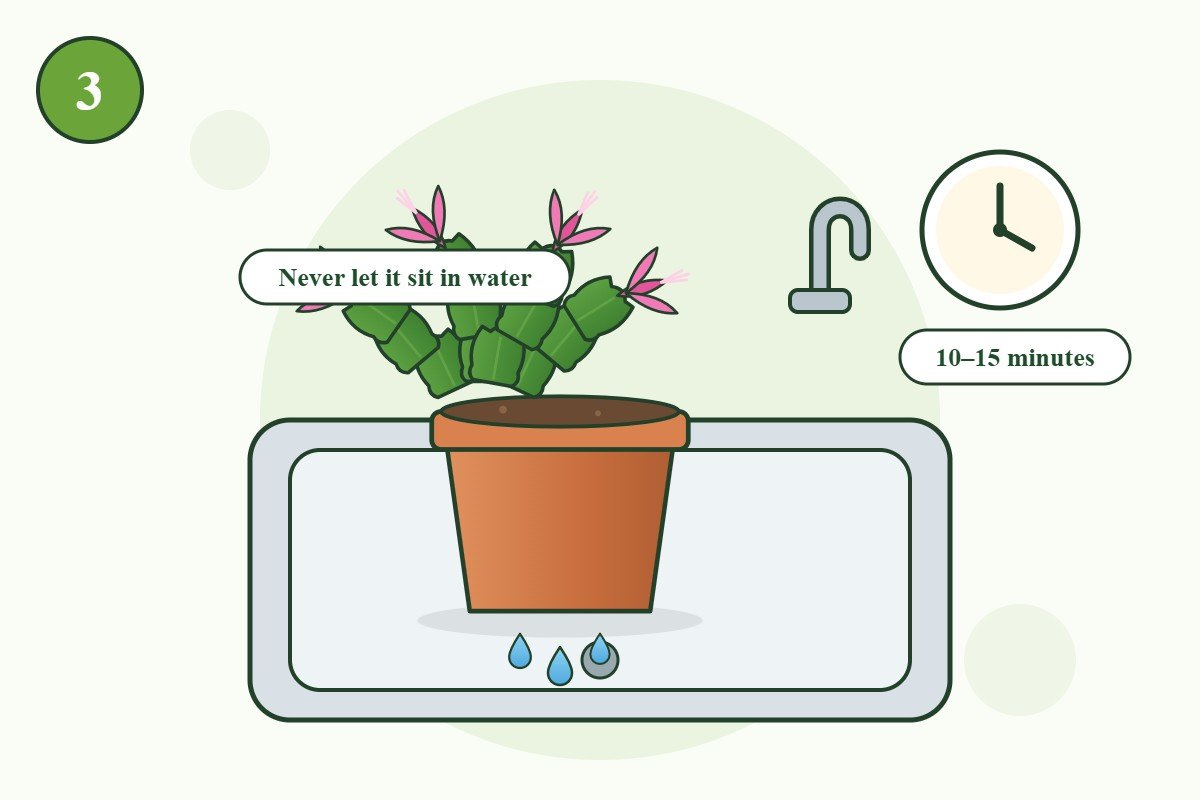
Set the pot in a sink or empty the saucer after 10–15 minutes. Never let a Christmas cactus sit in standing water — soggy roots quickly rot.
Step 4: Adjust Watering by Season
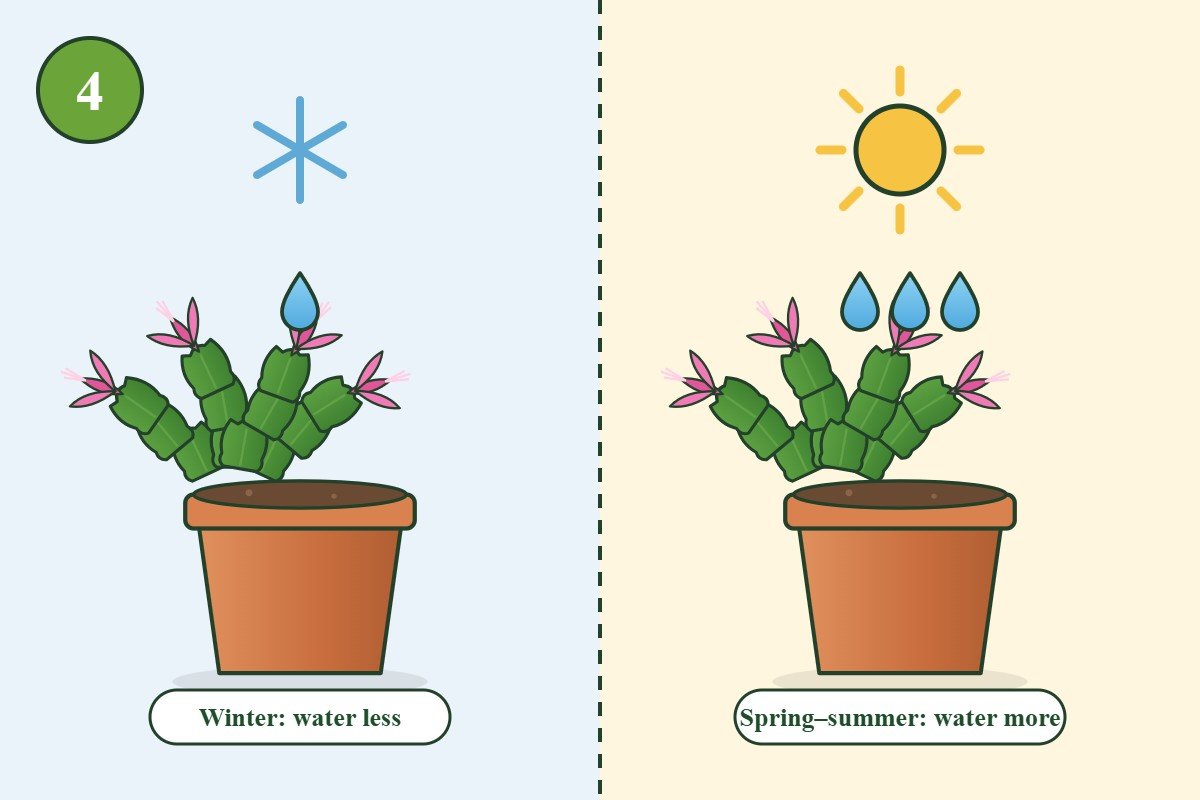
Water less after blooming ends in winter, when growth slows. Increase watering again in spring and summer when the plant is actively growing.
In most homes this works out to roughly every 1–2 weeks, but let the soil — not the calendar — be your guide.
Garden Tip
Use a pot with drainage holes. A beautiful pot without holes is the fastest way to kill a Christmas cactus, because water collects at the bottom and rots the roots.
Temperature and Humidity
Christmas cacti are comfortable at normal room temperatures of about 65–70°F during the day. What matters most is the night temperature in fall, because cool nights trigger flower buds (more on that below).
- Keep the plant away from heating vents, fireplaces, radiators and cold drafts from doors.
- Sudden temperature changes are a common reason buds fall off.
- Moderate to high humidity is best. In dry winter homes, set the pot on a tray of pebbles and water (with the pot above the waterline) or group it with other houseplants.
Best Soil and Pot for a Christmas Cactus
Holiday cacti need excellent drainage and air around the roots. A good homemade mix recommended by the University of Minnesota Extension is:
- 1 part sterile potting soil
- 2 parts peat moss
- 1 part perlite or coarse builder’s sand
A simpler option is a store-bought cactus or succulent mix with a handful of orchid bark or extra perlite added. Choose a pot only slightly larger than the root ball — Christmas cacti actually bloom best when they are a little pot-bound.
Fertilizing a Christmas Cactus
- Summer (June–August): feed monthly with a balanced houseplant fertilizer mixed at half strength.
- Fall: when buds are forming, switch to a low-nitrogen, higher-phosphorus and potassium fertilizer (for example, a 0-15-10 formula).
- Winter: no feeding needed while the plant blooms and rests.
How to Get a Christmas Cactus to Bloom
This is the question most people ask. Christmas cacti are “short-day” plants: they form flower buds when nights get long and cool in fall. If your plant sits in a warm living room with lamps on every evening, it may never get the signal to bloom.
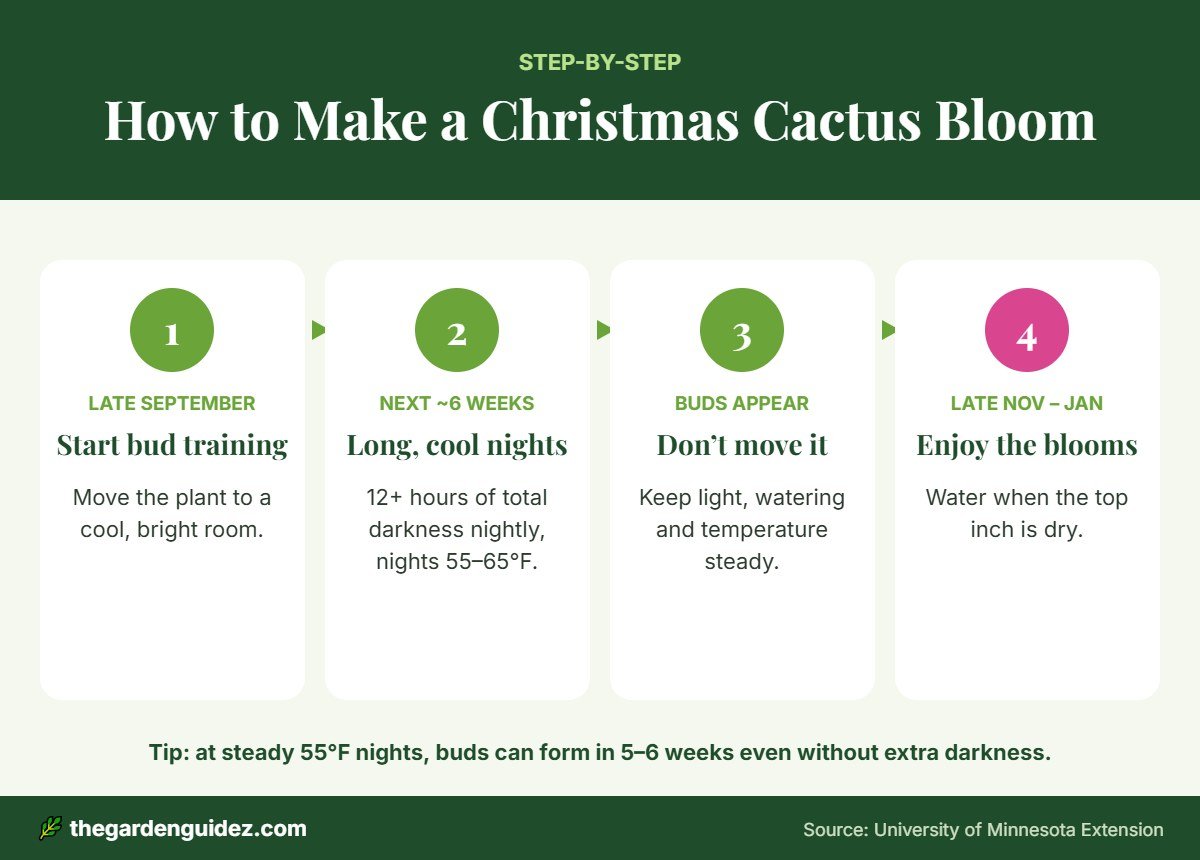
- Start in late September or early October. If your plant summered outdoors, it can stay outside in a protected spot until just before frost — the natural cool, shorter days help start buds.
- Give it long, dark nights. For about 6 weeks, the plant needs at least 12 hours of complete darkness every night when night temperatures are 60–65°F. A spare room, or covering it with a box overnight, both work.
- Or keep nights cool. At steady night temperatures around 55°F, buds can form in about 5–6 weeks even without extra darkness.
- Avoid warm nights. Plants are unlikely to bloom if nights stay above 65°F.
- Once buds appear, don’t move it. Keep light, water and temperature steady so the buds don’t drop.
Thanksgiving and Christmas cacti typically bloom after about 6 weeks of short days. Easter cacti need 8–12 weeks and flower in late winter or spring.
Pruning and Repotting
Prune after flowering ends, usually in late winter or early spring. Use clean pruners or simply twist off one to three segments at a joint. Each cut usually produces one or two new segments, so pruning makes the plant fuller — and the pieces you remove can be rooted into new plants.
Repot about every three years in spring, moving up only one pot size. Gently loosen old soil, trim any dark, mushy roots and replant at the same depth in fresh, fast-draining mix.
How to Propagate a Christmas Cactus
- Twist off a healthy piece with 2–3 segments.
- Let the cut end dry for a day, then dip it in rooting hormone (optional).
- Insert the bottom segment upright about one-quarter of its length into moist, well-draining mix or damp sand.
- Keep it in bright, indirect light at 70–80°F and keep the mix lightly moist, not wet.
- Check for roots after about 2 weeks by gently lifting the cutting. Once roots form, pot it up in cactus soil.
Want to grow more plants for free? Browse our plant propagation guides.
Common Christmas Cactus Problems and How to Fix Them
| Problem | Likely Cause | How to Fix It |
|---|---|---|
| No flowers | Nights too warm or too much light at night | Give 6 weeks of 12+ hour dark nights at 60–65°F, or cool 55°F nights, starting in early fall |
| Buds drop off | Drafts, heat vents, sudden temperature change or moving the plant | Keep it in one spot away from vents and doors once buds form |
| Wilting with wet soil | Root rot from overwatering | Let the soil dry, check drainage holes, repot into fresh mix if roots are mushy |
| Limp, wrinkled segments with dry soil | Underwatering | Water thoroughly and let excess drain |
| Red or purple segments | Too much sun, cold or root stress | Move to bright, indirect light and check watering |
| Small flies around the pot | Fungus gnats from constantly wet soil | Let soil dry out between waterings; repot in fresh soil if needed |
| Segments falling off | Heavy branches or overwatering | Prune large branches and review your watering routine |
| Brown, corky stem base | Normal aging on older plants | No action needed unless it is soft or slimy |
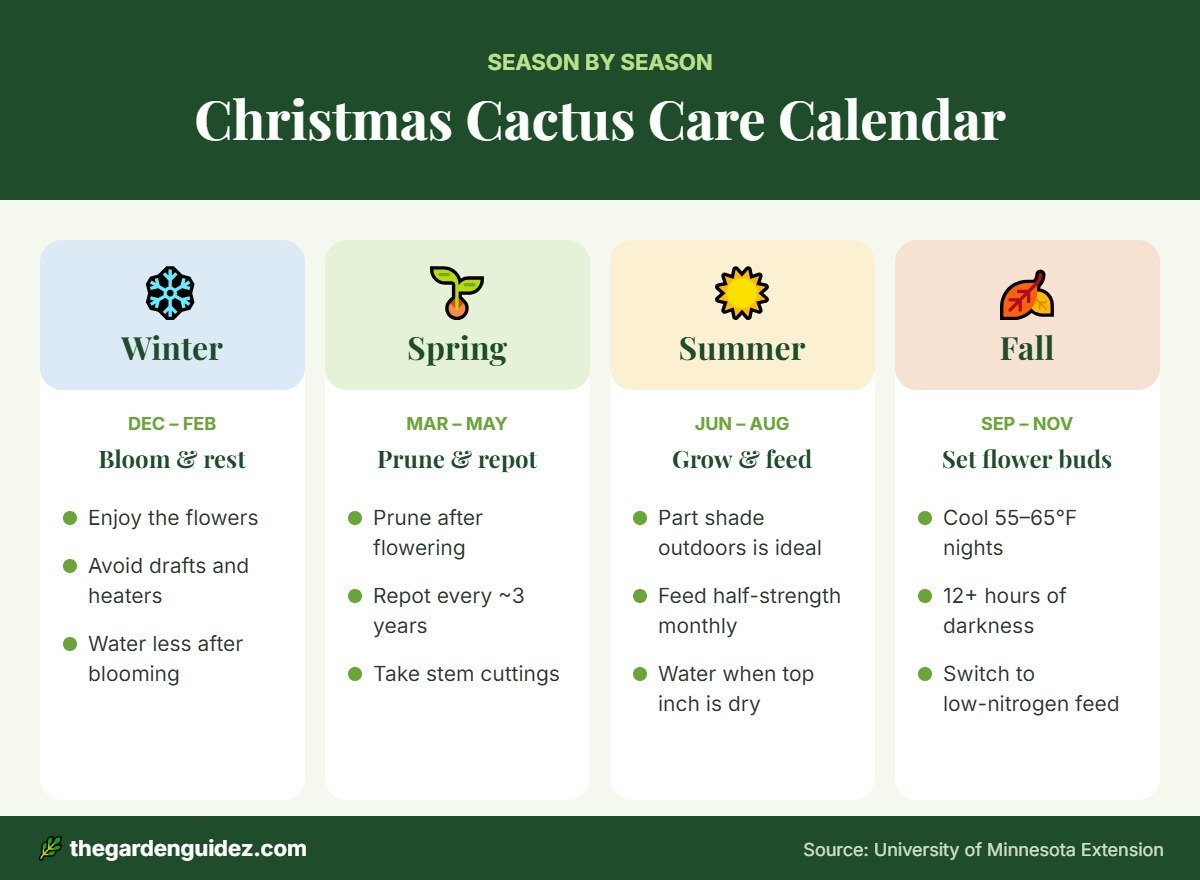
Year-Round Christmas Cactus Care Calendar
Use this seasonal checklist to keep your plant healthy and blooming every year.
Is a Christmas Cactus Safe for Pets?
Yes. The ASPCA lists Christmas cactus as non-toxic to dogs, cats and horses. That makes it one of the safest holiday plants to keep at home. Still, eating any plant material can cause mild stomach upset, so it’s best to keep it out of reach of curious pets.
Christmas Cactus FAQs
The Bottom Line
Treat your Christmas cactus like the rainforest plant it is: bright but indirect light, water when the top inch of soil is dry, fast-draining soil, and long, cool nights in fall. Do those four things and it will reward you with a burst of color every holiday season — for many years to come.
Looking for more indoor plant help? Explore all of our houseplant care guides.
Sources
- Holiday cacti — University of Minnesota Extension (reviewed 2026)
- Christmas Cactus — ASPCA Animal Poison Control, Toxic and Non-Toxic Plants
